
Follow the evidence through a pedigree
Select a family clue to see what it can contribute and where its limits begin. The example is fictional and teaches a reading method rather than assessing a real horse.
When form begins to take over
This is BetOwl's analytical priority model, not measured performance data or a probability forecast.
Pedigree fills a genuine evidence gap.
Keep the family clues, then examine what the debut actually showed.
Observed pace, finish and conditions begin to lead.
Reliable individual form normally outranks family theory.
A racecard can be wonderfully blunt. One horse has run six times and shown precisely what it is. The next has never seen a starting stall in public, yet beneath its name sits an imposing family tree: a fashionable sire, a useful dam, a Group winner somewhere in bold type and enough distinguished relations to fill a Christmas lunch.
That is where pedigree earns its keep. It supplies evidence when the horse itself has supplied little or none. It can point towards likely speed, stamina, surface and the age at which a young horse may begin to flourish. It can also lure a punter into paying for a famous surname while ignoring the animal standing in front of them.
Pedigree is a clue, not a result.
This guide explains how to read the bloodlines on a British racecard, which parts deserve most attention and when actual form should take over.
The short answer: Start with the sire, dam and damsire, then inspect the dam's previous runners and the horse's closest siblings. Use those clues most heavily with unraced or lightly raced horses. Once the horse has produced meaningful evidence on the track, its own performance, fitness, conditions and price matter more than family reputation.
The pedigree terms that matter first
Bloodstock language looks forbidding because it compresses generations into a small space. The first layer is simple. If the wider buying and breeding business is unfamiliar, start with what bloodstock means in horse racing, then return to the family tree.
| Term | Plain-English meaning | Why a punter might care |
|---|---|---|
| Sire | The horse's father | The sire's body of runners may reveal broad patterns involving distance, age and surface. |
| Dam | The horse's mother | Her own ability and, more importantly, the records of her previous offspring provide the closest family evidence. |
| Damsire | The dam's father, also called the broodmare sire | This adds another influence to the maternal side and can help explain why a mating differs from the sire's usual type. |
| Full sibling | A horse with the same sire and dam | The closest named racing comparison in a conventional pedigree, although the two horses can still differ markedly. |
| Half-sibling | In normal sales and racing usage, a horse out of the same dam but by a different sire | Useful evidence about what the dam has already produced with another mating. |
| First dam | The subject horse's mother and her produce record | Usually the first place to look for winners, preferred trips and how quickly the family tends to develop. |
| Second dam | The maternal grandmother | Broadens the family when the first dam has few or no runners. |
| Black type | Catalogue emphasis earned through qualifying Group, Graded or Listed performance | A regulated sign of racing quality in the family, not proof that every relative inherited it. |
The registered pedigree is not a piece of sales-room folklore. Weatherbys maintains the General Stud Book for Thoroughbreds in Britain and Ireland, while parentage is verified during registration. The names are the solid part. What those names are supposed to predict is where judgement begins.
Read the sire as a population, not a celebrity
The first mistake is to judge a sire only by his own racing career. A brilliant six-furlong horse may not produce an identical queue of brilliant six-furlong horses. The mares sent to him differ, his offspring inherit different combinations of genes and the successful runners may establish patterns that were not obvious on the day he retired to stud.
For punting purposes, the useful question is not simply, “How good was the sire?” It is, “What have enough of his runners tended to do?”
Look for evidence such as:
- the distances at which his established runners have performed best;
- whether his two-year-olds tend to be ready early or improve with time;
- whether a meaningful number have handled all-weather surfaces;
- whether his first-time starters win often enough to justify market confidence;
- how those records change when the sample is split by the type of mare.
Sample size matters. A young stallion with three winners from nine runners has made a promising start, but nine runners cannot carry the same weight as several crops. Early percentages can be bent out of shape by one unusually talented horse or by the quality of the first mares he covered.
The sire therefore gives a broad prior expectation. He does not issue instructions.
The dam can tell the more personal story
A stallion may produce hundreds of foals. A mare produces them one at a time, and her record is inevitably smaller. That makes it noisier, but also closer to the horse being assessed.
Start with whether the dam raced. If she did, note her level, trip and surface, but resist the idea that an unraced or modest mare is automatically a negative. Breeding value and racing achievement overlap without being identical, and many important broodmares were not stars on the track.
Then inspect her produce record:
- How many foals of racing age has she had?
- How many ran and how many won?
- Did they need time, or were they effective at two?
- Did several show ability over a similar trip?
- Were they by sires with comparable profiles to today's subject?
“Dam of two winners from three runners” is evidence. “From the family of a Derby winner” may be interesting, but the Derby winner could sit several branches away. The closer and more repeatable the evidence, the more useful it becomes.
This is why the first dam usually deserves more of a punter's attention than a glittering name buried under the third or fourth dam. The grand relation decorates the page. The mare's own runners describe the household.
Siblings: close evidence, never carbon copies
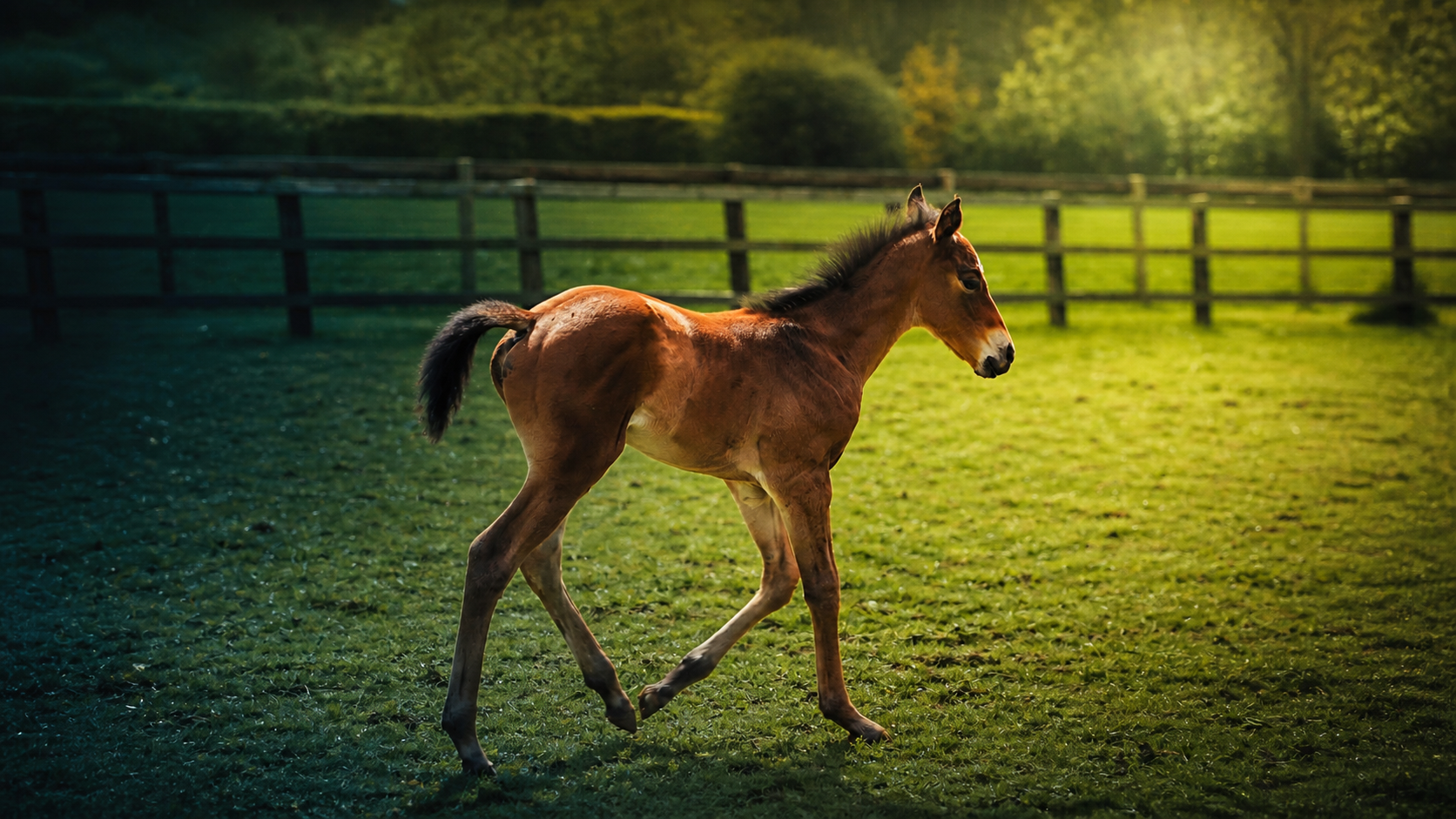
A full brother or sister shares both parents with the horse in question. A maternal half-brother or half-sister shares the dam but has a different sire. Both can help, particularly when assessing an unraced horse, but neither is a duplicate produced by equine photocopier.
Full siblings inherit different mixes from the same parents. They can differ in size, soundness, temperament, maturity and racing ability. Half-siblings add the further complication of a different sire. One may be a sharp juvenile while another needs a mile and a half and the patience of a saint.
The best use of sibling form is to look for a pattern rather than a single headline:
- Three siblings who all improved with age say more about likely maturity than one precocious winner.
- Several runners effective on soft ground are more interesting than one isolated mudlark.
- Repeated ability around the same distance can strengthen a tentative trip judgement.
- A poor record from several well-supported offspring may be more informative than one expensive but unraced relation.
Price can distract here. A seven-figure yearling and its cheaper sibling still have to gallop. The auction told us what buyers believed at the time; the race tells us what the horse can do now.
What black type actually means
Black type is not merely a flourish designed to excite the ring. International cataloguing standards determine which performances qualify for emphasis in recognised sales catalogues. Winners and horses placed in the first three in qualifying Group, Graded and Listed races receive black type under the relevant standards.
Its value is straightforward: it identifies high-level racing performance within the family. A dam who won a Group race, or repeatedly produced Group and Listed performers, has achieved something substantially different from a mare whose page is built around ordinary winners.
Yet black type is often read too lazily. It does not measure how closely the highlighted horse is related to the subject, whether the relevant performance came over a comparable trip, or whether the same branch of the family produced it. One bold name under the third dam should not outweigh several ordinary runners under the first.
Read the relationship before admiring the typography.
Can pedigree predict distance?
Distance is where pedigree can be especially useful, but the useful answer is usually a range rather than a furlong carved in stone.
Scientific research supports a genetic contribution to racing aptitude, with the strongest well-established genomic association involving variation around the myostatin gene and optimum racing distance. Wider studies, however, report low to moderate heritability for many racing-performance measures and stress that distance, track type, age, training and the measure chosen all affect the estimate.
In plainer language, breeding matters, but it does not work alone.
For an unraced two-year-old, combine:
1. the sire's established distance profile; 2. the dam's own racing record; 3. the best trips of her previous runners; 4. the damsire's influence; 5. the horse's age, race conditions and likely stage of development.
A speed-bred sire crossed with a staying mare does not create an automatic seven-furlong horse. It creates a question whose answer may sit somewhere between the two, or somewhere inconveniently outside both expectations.
Once the horse has run, use the evidence in front of you. How it travelled, where pressure arrived, whether it finished its race and what happened next are more immediate than a theoretical family trip. The British racecard guide explains how to put that evidence alongside class, going, draw, weight and pace.
Ground and surface need a stronger burden of proof
Pedigree comments about soft ground and all-weather surfaces are common because they sound satisfyingly precise. They are also easy to overstate.
A sire may have a respectable record on Tapeta, but that could reflect the standard of races his offspring contested, the trainers using those tracks or the distances involved. A close relative winning on heavy ground is a clue, not a hereditary guarantee of webbed feet.
Treat surface and going in layers:
- broad sire evidence from a worthwhile sample;
- repeated evidence from the dam's runners;
- the individual horse's action and previous runs;
- the race's exact surface, trip and pace demands.
Do not collapse all synthetic racing into one category. Tapeta and Polytrack are different surfaces, and a horse's record may also be tangled with track layout and race quality. The same caution applies to turf going. “By a soft-ground sire” is a starting note. It is not analysis completed before breakfast.
Inbreeding: what 3x4 means and what it does not
When the same ancestor appears on both sides of a pedigree, the shorthand may describe the horse as inbred 3x4, 4x4 or similar. The numbers state how many generations back the repeated ancestor appears along each route. A 3x4 duplication is closer than a 5x5 duplication.
Breeders may seek to reinforce desirable influences through such matings, but a punter should be wary of treating a fashionable cross as a private code for ability. Large studies of Thoroughbreds have found that the effects of inbreeding are complicated, can differ according to the ancestors involved and may include inbreeding depression affecting racing performance or even the probability of reaching the racecourse.
The practical conclusion is restrained. Note close duplication, especially when researching breeding and soundness, but do not award a horse imaginary pounds because a famous ancestor appears twice. A repeated name is a fact. Its effect on this particular runner remains uncertain.
A worked example for an unraced maiden
Consider a fictional debutant called Quiet Ledger, running over seven furlongs on good ground in September.
| Evidence | What it suggests | What it cannot prove |
|---|---|---|
| Sire's runners are broadly effective from six furlongs to a mile | Seven furlongs is plausible | Quiet Ledger has the sire's typical speed or readiness |
| Dam won once over a mile at three | Some support for the trip and later development | The debutant will need a mile or improve at three |
| Two maternal half-siblings won at seven furlongs and a mile | The immediate family has repeatedly handled this range | The debutant is as able as either sibling |
| No sibling won first time out | The family may not be habitually precocious | Quiet Ledger cannot win on debut |
| Trainer's debut runners are rarely fully wound up | Market enthusiasm deserves testing | The horse is unfit today |
The pedigree supports the distance but offers no compelling evidence of first-time readiness. That is a useful conclusion because it changes the right question. Instead of asking whether Quiet Ledger is “bred to win”, ask whether the available price fairly reflects an uncertain debut from a family that may improve with racing.
That brings pedigree back into the discipline of probability. Our guides to implied probability and what makes a bet good value explain why an appealing chance and a worthwhile price are not the same thing.
When pedigree matters most
Pedigree has its greatest analytical value when direct evidence is missing:
- first-time starters;
- lightly raced juveniles;
- horses trying a markedly different trip;
- a first run on a new surface;
- National Hunt prospects whose stamina and development remain uncertain;
- a young sire's emerging first crop, handled with an obvious sample-size warning.
Its influence should decline as a horse builds a reliable record. If a five-year-old has repeatedly failed to stay a mile and a half in truly run races, a stout pedigree does not keep putting stamina back into the tank. If a proven all-weather performer comes from a family associated mainly with turf, the horse has settled the argument itself.
Form is realised evidence. Pedigree is possibility.

Seven common pedigree mistakes
1. Paying for the sire's name
Fame attracts attention and can shorten a price. Ask what the sire's relevant runners have actually done under today's conditions.
2. Leaping to a distant champion
A Group 1 winner under the third dam may be much less informative than the first dam's ordinary but consistent produce record.
3. Treating sale price as ability
The hammer price records a contest between buyers using the information available then. It does not award speed, soundness or courage.
4. Ignoring the dam
Punters often recognise stallions and skim past mares. The dam's previous runners may offer the closest usable clues on the page.
5. Using one sibling as a template
One relation can mislead. Look for repeated family traits and remember that full siblings are not identical.
6. Mistaking possibility for probability
“Bred to stay” does not mean “will stay”, and “bred for the surface” does not mean “acts on it”. Keep the language as cautious as the evidence.
7. Refusing to update
Pedigree should not remain the leading argument after the horse has shown a clear, repeatable pattern on the track.
A five-minute pedigree routine
When an unfamiliar or unraced horse appears on the BetOwl racecards, work through this order:
1. Identify the evidence gap. Is the horse unraced, changing trip or trying a new surface? 2. Check the sire's relevant runners. Use distance, age and surface evidence from a meaningful sample. 3. Read the first dam properly. Note her own record, runners, winners and the trips at which her offspring performed. 4. Inspect close siblings. Look for repeated traits rather than one star relation. 5. Understand any black type. Confirm the relationship and the conditions in which it was earned. 6. Compare pedigree with the individual. Add trainer patterns, market price, race conditions and anything the horse has already shown. 7. Reduce confidence when the evidence conflicts. Uncertainty is not a flaw in the process. It is often the most accurate conclusion available.
Pedigree is most valuable when it stops us pretending to know too much. It can narrow a range, expose a lazy assumption and give structure to a maiden full of blank spaces. What it cannot do is run the race in advance.
The family gives the horse its opening paragraph. The horse writes everything after that.
Betting is for adults aged 18 and over. Pedigree analysis cannot remove uncertainty or guarantee a return. Set limits, never chase losses and use BetOwl's responsible gambling guidance if betting is becoming difficult to control.