
An NHL game can be tied after 60 minutes and still have a winner on the night. That sounds simple until two bets on the same team settle differently. A two-way moneyline selection may win after overtime or a shootout, while a three-way regulation selection on that team has already lost. The decisive question is not who eventually won. It is which part of the game your market measures.
This guide separates the three clocks that matter to a UK bettor: the first 60 minutes, overtime and a possible shootout. It then checks current published rules from bet365, Betfair Sportsbook and William Hill rather than assuming a familiar market name means the same thing everywhere. Rules were reviewed on 18 September 2026. Always check the wording on your own bet slip and the operator's current rules before betting, because a special market or competition can override a general rule.
The three possible stopping points
An NHL regular-season match consists of three 20-minute regulation periods. If the teams are level, a five-minute sudden-death overtime follows. If neither scores, a shootout decides the winner. Playoff overtime follows a different format and has no regular-season shootout, so do not carry a regular-season worked example into a playoff market without checking the competition and bet terms.
For settlement, think of three snapshots:
1. At 60 minutes: the regulation score, which can be a draw. 2. After overtime: a winner if someone scores, or still level if the shootout is required. 3. After the shootout: a winner. For many team and totals markets, the winning side receives one goal in the final settlement score, however many individual shootout attempts were scored.
The third snapshot is particularly easy to misread. A shootout winner can be credited with one goal in the team score while no shootout attempt counts as an individual player's goalscorer goal. Team-result accounting and player-stat accounting are not the same thing.
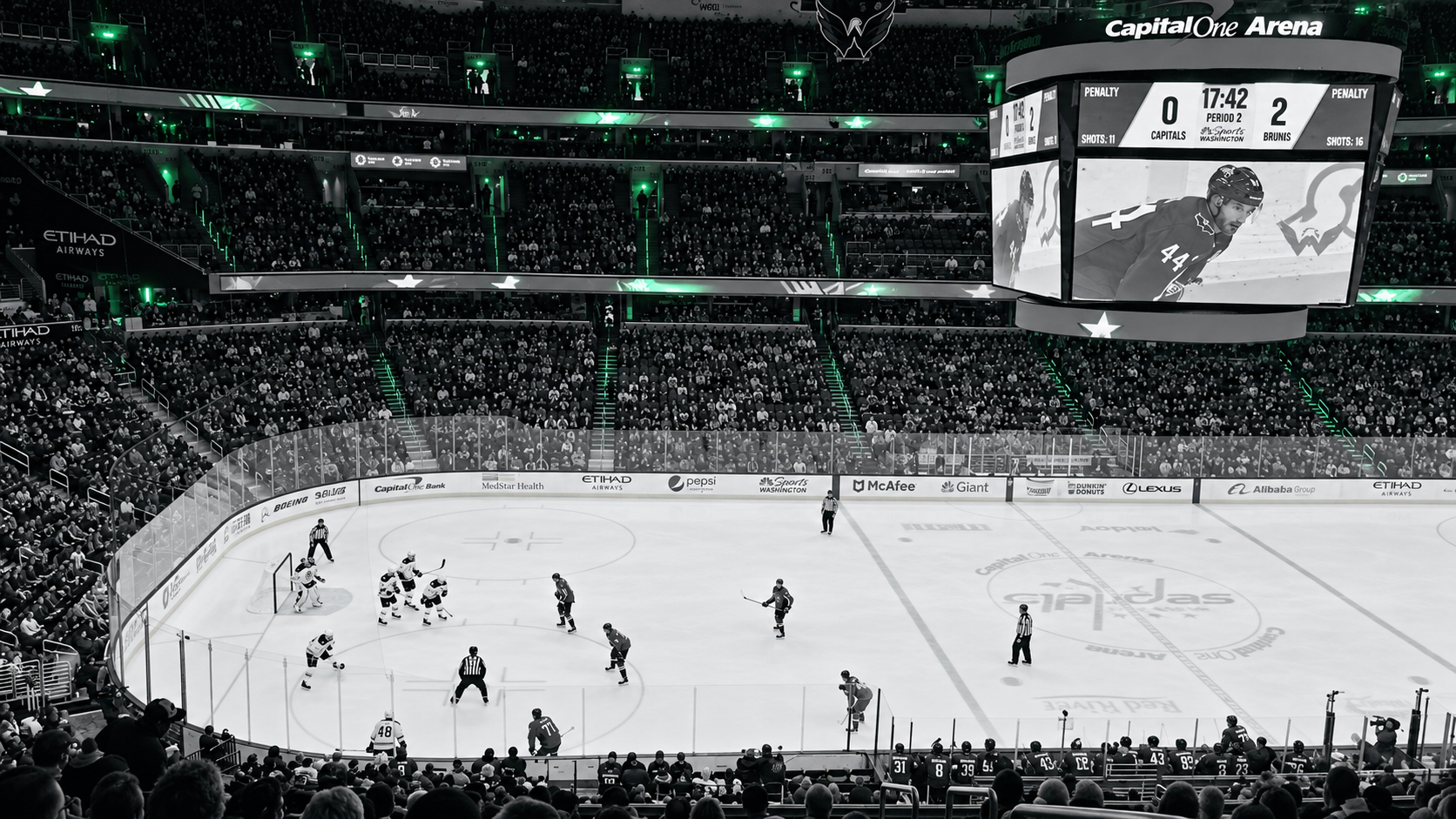
An NHL arena photograph can show the second period and its running score, but it cannot tell you how a later bet will settle. The market's stopping point does that.
What the main markets include
The three checked sportsbooks broadly agree on the core distinction. A two-way winner market includes overtime and a shootout. A three-way or explicitly labelled 60-minute result market stops after regulation. Ordinary game totals generally use the final score including an overtime goal or the one-goal shootout adjustment, unless the market says 60 minutes only. Player goalscorer bets can count an overtime goal, but not shootout attempts.
| Market wording to inspect | Regulation | Overtime | Shootout | What to check on the slip |
|---|---|---|---|---|
| Two-way moneyline or match winner | Counts | Counts | Winner counts | Only home or away is offered; check for any special competition condition. |
| Three-way result or 60-minute result | Counts | Excluded | Excluded | Home, draw and away are offered. A regulation draw remains the winning draw selection. |
| Ordinary game total or two-way puck line | Counts | Usually counts | The one-goal settlement adjustment usually counts | Check for a 60-minute, three-way or other special label. |
| Anytime or first goalscorer | Counts | Counts | Shootout attempts excluded | Check the player's participation condition too. |
| Race to a stated goal | Counts | Operator-dependent | Usually excluded | Do not infer the time boundary from the market name alone. |
This table is a reading aid, not a universal settlement promise. In particular, the final row is not interchangeable across the checked operators. Betfair Sportsbook's US ice-hockey rules include overtime but exclude shootouts for its "Race to xth Goal" market. The bet365 UK rules exclude overtime and shootouts for "Race to Markets", and William Hill's US ice-hockey "Race to X Goals" rules settle on regulation play. A bettor looking only at the phrase "race to three" could therefore misunderstand whether a goal scored in overtime can complete the race. The exact market and operator rule must decide it.
The same care applies across competitions. Betfair's European ice-hockey section starts from a 60-minute default unless a market says otherwise; its US ice-hockey section starts from an overtime-inclusive default. This article concerns NHL markets, not a blanket rule for every league shown under Ice Hockey.
A single score, four different answers
Take a hypothetical NHL regular-season game. Home and Away finish regulation at 2-2. Neither scores in overtime. Home wins the shootout, so the final team score used by the checked ordinary winner and total-goals rules is 3-2. These are invented scores for explanation, not a real match or betting recommendation.
| Example selection | Settlement under the stated market | Why |
|---|---|---|
| Home in a two-way moneyline | Wins | Home won the match after the shootout. |
| Draw in a three-way 60-minute result | Wins | Regulation ended 2-2; the shootout does not undo that result. |
| Home in a three-way 60-minute result | Loses | Home had not won at the market's 60-minute cut-off. |
| Over 4.5 ordinary total goals | Wins if the market includes shootouts | The one-goal shootout adjustment takes the team total from four to five. |
| Over 5.5 ordinary total goals | Loses | Five is below six. |
| Home minus 1.5 on a two-way puck line | Loses | The final settlement margin is one goal, not two. |
| The successful shootout taker as an anytime goalscorer, with no earlier goal | Loses | A shootout attempt is not credited as an individual goalscorer goal. |
Now change only one fact: Home scores in overtime instead. The final score is still 3-2, so those two-way winner, three-way regulation, ordinary total and minus 1.5 outcomes stay the same. But the overtime scorer has an actual player goal that can count in an anytime goalscorer market. The identical final score hides a different player-stat outcome. This is why a bet slip's exact market label matters more than a scoreboard screenshot.
In an actual disputed settlement, record the bet slip, market title, timestamp and the relevant official box score before contacting the operator. Do not assume that a shootout goal in the team score means a player received a statistical goal.
The operator comparison behind the guide
BetOwl checked the currently published ice-hockey rules of three sportsbooks available to UK readers. The shared core is useful; the differences are more useful. They show where a bettor should stop relying on a general NHL rule and read the product-specific terms.
| Checked operator | Two-way winner | Three-way or 60-minute result | Ordinary totals and shootout | Race-to-goal boundary |
|---|---|---|---|---|
| bet365 UK | Overtime and shootout included by default | Settled at the end of regulation, subject to its named exception | One goal added to shootout winner for applicable totals | Its listed Race to Markets exclude overtime and shootouts. |
| Betfair Sportsbook, US ice hockey | Overtime and shootout included | Match Odds (3-Way) excludes overtime | One goal added to shootout winner for applicable markets | Its Race to xth Goal includes overtime but excludes shootout. |
| William Hill, US ice hockey | Money line includes overtime and shootout | Its 60-minute market stops at regulation | Published totals rules use the official result including overtime or shootout where specified | Its Race to X Goals is regulation only. |
This is a comparison of published rules accessed on 18 September 2026, not a guarantee of how an uninspected promotion, live prop or future version will settle. The individual bet slip may specify a narrower period. A sportsbook can also have separate rules for abandoned matches, minimum time played, void players and unusual competitions. Before treating a difference as an error, check the rule that actually governs the market you selected. Our broader settlement guide explains why the accepted bet terms, not a generic market description, control the outcome.
The rule comparison also prevents a common pricing mistake. Two-way Home and three-way Home are different events. The first can still win after 60 minutes if Home prevails in overtime or a shootout. The second cannot. A higher quoted price for three-way Home is not automatically better value: it buys a narrower route to a win. Comparing betting prices only makes sense when the selections have the same settlement boundary.
What changes in the playoffs?
Do not assume every NHL match ends with the five-minute regular-season overtime and shootout described above. The postseason can continue through full sudden-death overtime periods until a goal ends the game. For a two-way winner, the eventual winner still matters. For a player goalscorer or totals bet, the additional played periods can matter too. But a three-way or 60-minute result remains tied to its stated regulation boundary. Check the relevant bookmaker's playoff terms and the match format before extrapolating from a regular-season example.
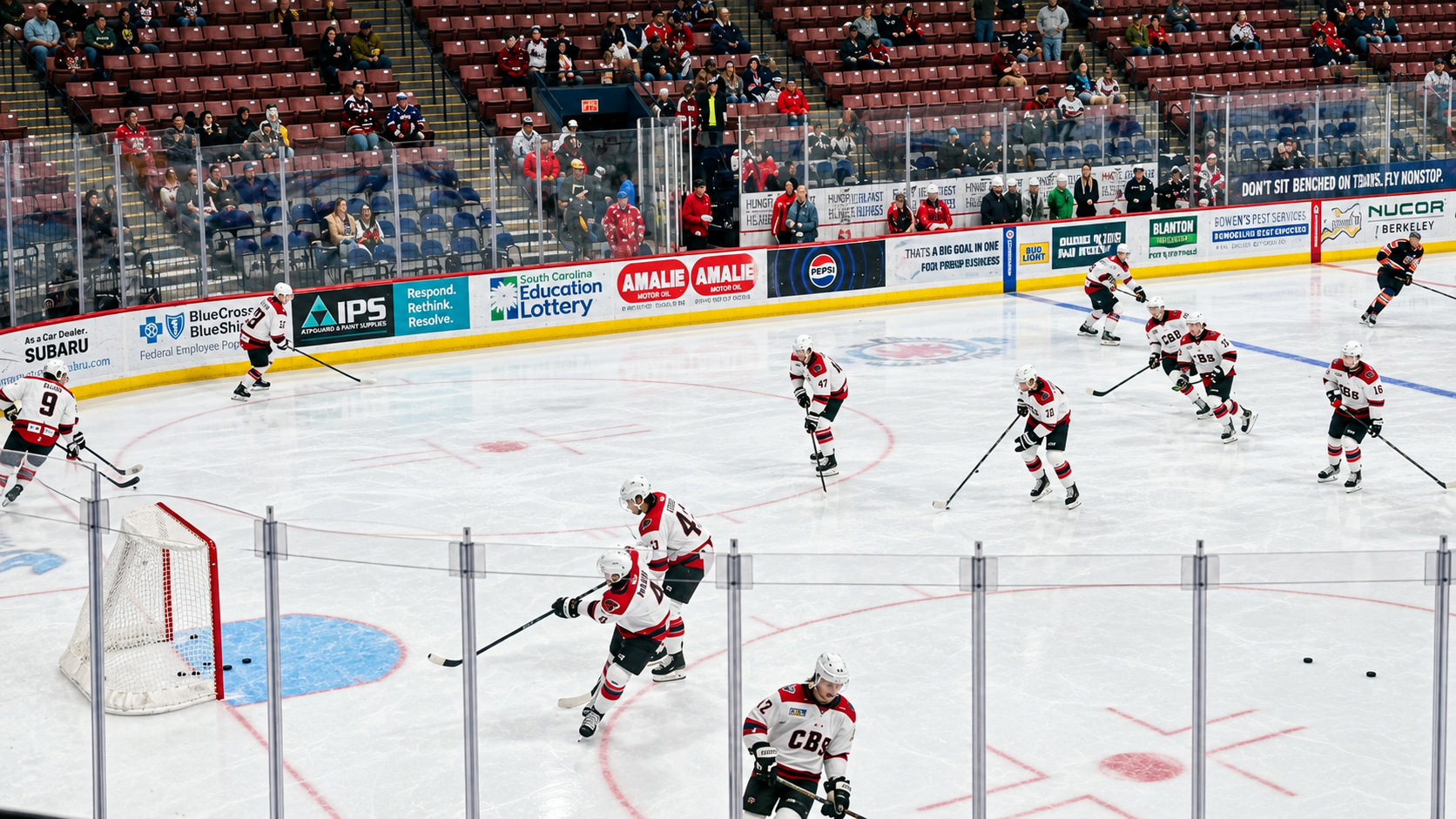
An ice-hockey photograph from a different competition can explain the physical game, but it cannot establish NHL settlement rules. Those rules come from the named NHL market and the operator's terms.
A four-question check before betting
1. Does the market offer a draw? If it does, it is likely a 60-minute three-way result, but read the label and rules rather than assuming. 2. Does the market say "including overtime", "including shootout", "60 minutes" or "regulation only"? Those words define which score is used. 3. Is it a team-result market or an individual-player market? A one-goal shootout adjustment to the team score does not give a skater a goalscorer statistic. 4. Does the operator have a specific rule for this market? The checked Race to X rules demonstrate why a general ice-hockey default can be overridden.
If the answer remains unclear, do not guess from the moneyline or from another bookmaker's help page. Check the current rule on the site where the bet would be placed, or ask for clarification before placing it. Understanding the settlement boundary can prevent a mistaken bet, but it does not make a selection profitable. Betting is for adults aged 18 and over; set a limit you can afford to lose and stop if it ceases to be enjoyable.