
The verdict that settled almost nothing
The eight players walked out of a Chicago courtroom in August 1921 as men acquitted. A jury had rejected the criminal case that they had conspired with gamblers to defraud the public during the 1919 World Series. Supporters celebrated. The players might reasonably have expected that baseball would now have to take them back.
Within a day, Kenesaw Mountain Landis made clear that it would not.
Baseball's first commissioner did not try to retry the criminal charge. He imposed a sporting judgement. Any player who threw a game, promised to throw one, or sat through a discussion about fixing games without reporting it would not play professional baseball again. Eddie Cicotte, Lefty Williams, Chick Gandil, Happy Felsch, Swede Risberg, Fred McMullin, Buck Weaver and Shoeless Joe Jackson were all banned.
That collision between two decisions created the version of the Black Sox scandal that has lasted for more than a century. The courtroom said not guilty. Baseball said permanently ineligible. Popular culture later supplied a cheap owner, exploited players, a single criminal mastermind and an innocent star whose World Series batting average seemed to answer every accusation.
The records do not fit so neatly.
The Black Sox scandal was a real attempt by members of the Chicago White Sox to corrupt the 1919 World Series against the Cincinnati Reds. That central fact is supported by testimony, admissions, payments and the later accounts of people inside the plot. Almost everything around it is less tidy: who first proposed the fix, how many separate gambler groups were involved, which games remained compromised, how hard each player tried to lose, how much money changed hands and what individual guilt should mean.
In May 2025, Major League Baseball added one more turn. It decided that permanent ineligibility ends when the person dies. All eight Black Sox players were therefore removed from the ineligible list, making them eligible to be considered for the National Baseball Hall of Fame. The decision did not exonerate them, overturn Landis or place any of them in Cooperstown. It reopened a door while leaving the argument on the other side.
This is the Black Sox story as the surviving evidence now allows it to be told: not a morality play, but a sporting case in which the facts, the law and the punishment never quite occupied the same ground.
A favourite becomes a market warning
The 1919 White Sox looked built to win. They had taken the American League pennant with an 88-52 record and still carried much of the side that had won the World Series two years earlier. Jackson was one of baseball's great hitters. Cicotte had won 29 regular-season games. Williams had won 23. The Cincinnati Reds were excellent rather than lucky, but Chicago entered the best-of-nine Series as the widely recognised favourite.
Then the market began to move.
Contemporary reports described heavy money arriving for Cincinnati before Game One. That did not prove a fix. Prices move for many reasons, and the betting market of 1919 was fragmented, lightly documented and nothing like a modern regulated exchange. It did, however, tell informed observers that confidence in the favourite had changed for reasons not explained by the public baseball case.
The suspected plot had already spread beyond one clean agreement. Later testimony and documentary research indicate that Gandil and Cicotte helped initiate contacts, while separate approaches involved Boston bookmaker Joseph "Sport" Sullivan and former Major League pitcher Bill Burns with Billy Maharg. Arnold Rothstein became the most famous gambler attached to the story, but the idea that one distant mastermind designed and controlled everything gives the conspiracy far more order than it appears to have possessed.
Players discussed a payment reportedly totalling $100,000. The actual flow of money was irregular. Gamblers doubted the players; players doubted the gamblers; overlapping groups attempted to profit from the same inside knowledge. Promises were delayed, reduced or ignored. Some players appear to have tried to abandon the arrangement once payment failed to arrive. A sporting competition was being manipulated by people who could not even trust their co-conspirators.
That is one reason the game-by-game question is so difficult. Cincinnati won the opener 9-1 against Cicotte and the second game 4-2 against Williams. The Reds led the Series four games to one before Chicago won Games Six and Seven. Williams was driven from the decisive eighth game in the first inning as Cincinnati completed a 10-5 victory and a five-games-to-three championship.
Some passages of play attracted immediate and later suspicion. Others look ordinary when separated from the scandal. The honest conclusion is narrower than either extreme: a fix was arranged, money was paid and some performances were deliberately compromised, but the surviving record does not let us label every error, hit, pitch or result as corrupt.
Eight names, eight different cases
The phrase "Eight Men Out" makes the players sound like one unit. They were not. Their involvement, testimony, money and play differed, and the permanent ban flattened those differences into one outcome.
| Player | What the record supports | What remains disputed |
|---|---|---|
| Chick Gandil | A central organiser who dealt with gamblers and recruited team-mates | Which gambler arrangement came first and how all payments were divided |
| Eddie Cicotte | An early participant who admitted agreeing to the fix and receiving money | The exact sequence of his decisions and which performances were deliberately compromised |
| Lefty Williams | Involved in the agreement, received money and lost three Series starts | The reliability of later claims that threats influenced the final game |
| Shoeless Joe Jackson | Told the grand jury he agreed to take part and received $5,000, then changed his account | How his actions on the field should be interpreted and how freely he entered the scheme |
| Happy Felsch | Admitted involvement and receiving money in later accounts | The precise point at which he stopped following the plan |
| Swede Risberg | Attended planning discussions and was identified as an active participant | The detail and timing of the payments attributed to him |
| Fred McMullin | Joined the group and was included in the payment arrangements | How much influence he had on the scheme and the Series itself |
| Buck Weaver | Knew of the plan and attended discussions, with no established payment to him | Whether knowledge without participation justified the same permanent punishment |
That final question made Weaver's case the hardest one for many supporters. He batted .324 in the Series, played strongly and was not shown to have accepted a payoff. Landis nevertheless treated silence as an integrity offence. If a player could hear a plan to corrupt the championship, keep it from the club and continue as though nothing had happened, the commissioner reasoned that baseball could not rely on him.
The rule was severe, but it was not hidden after the event. Landis's published standard explicitly covered players who sat in a conference where a fix was discussed and did not report it. Weaver's advocates can argue that the lifetime result was disproportionate. They cannot turn his knowledge into no knowledge at all.
Shoeless Joe and the seductive statistic
Jackson became the emotional centre of the scandal because his talent made the loss larger. He finished his Major League career with a .356 batting average. In the 1919 World Series he hit .375, made no recorded fielding errors and hit the Series' only home run. Those numbers have often been presented as proof that he could not have tried to lose.
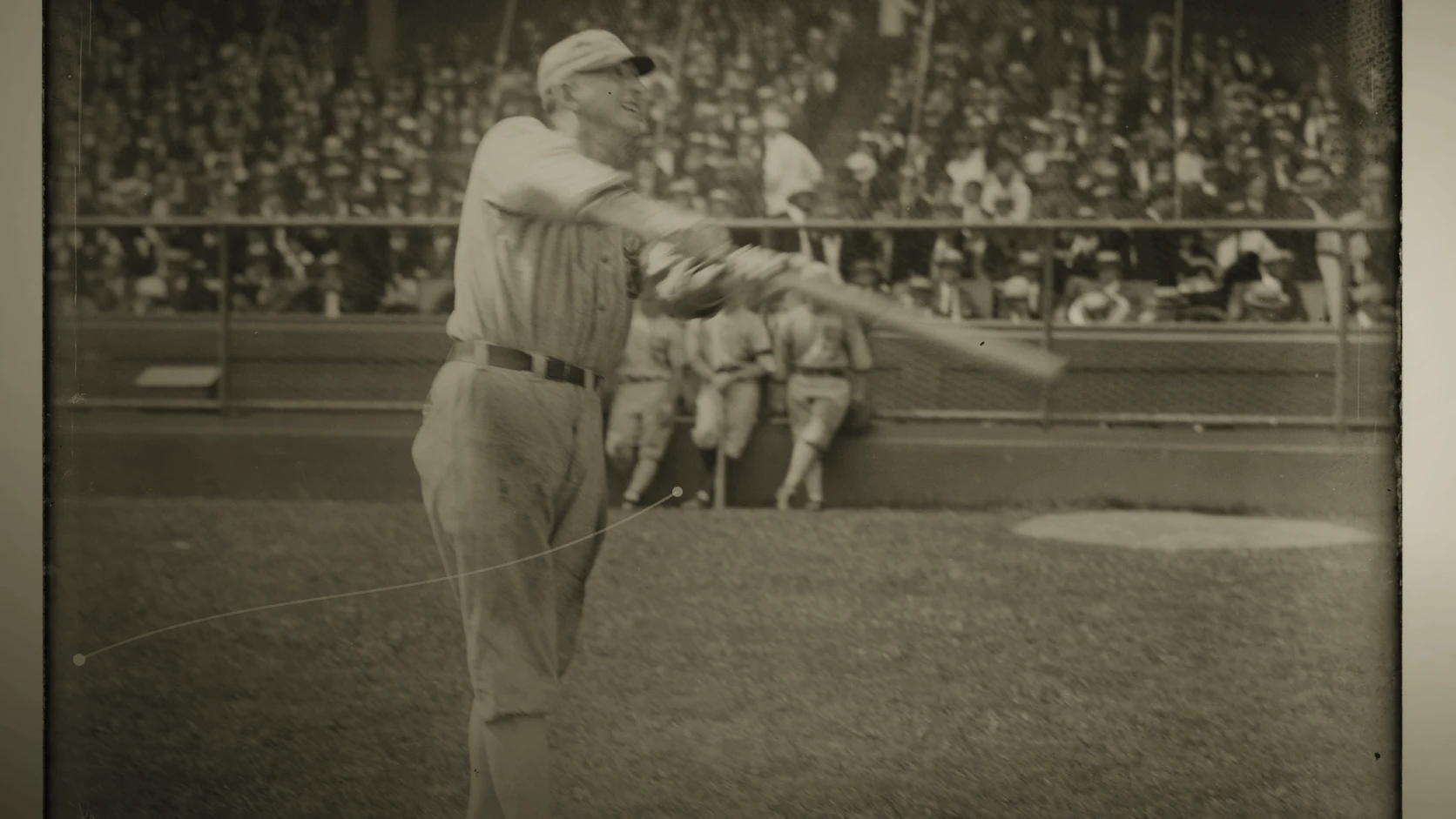
They are evidence of performance, not a verdict on intent.
A player can contribute hits while still withholding effort in a particular situation, and a clean error column does not measure positioning, urgency or every throw. Equally, suspicion does not justify reclassifying every Jackson play as proof of corruption. The statistics neither clear him nor establish the complete case against him.
His own accounts are more damaging and more complicated. Jackson told the 1920 grand jury that he had agreed to participate and had received $5,000, though he later retracted or contradicted important parts of that testimony. Questions about his literacy, legal representation and understanding of the process matter when assessing the statement. They do not erase the money or transform his changing stories into one consistent declaration of innocence.
The famous plea "Say it ain't so, Joe" is similarly unstable. Jackson repeatedly denied that the encounter with a young fan happened as legend described it. Yet the line survived because it gave the scandal a child, a fallen hero and a complete emotional meaning in five words. The archival record is harder to remember because it refuses that kind of perfection.
The public debate also tends to merge two questions. Was Jackson a magnificent player? Clearly. Does a magnificent playing record settle whether he joined a betting conspiracy? It does not. Hall of Fame voters assessing him in future will have to hold both facts at once.
The owner was powerful, but the bonus story fails
The most durable explanation for the fix makes Charles Comiskey's parsimony the cause. In the familiar version, the White Sox owner paid a championship-level team badly, charged players to clean their uniforms and denied Cicotte a promised $10,000 bonus by keeping him from a 30th win. The players then turned to gamblers in resentment.
That story has the dramatic efficiency of a film script. Contract research has broken its central mechanism.
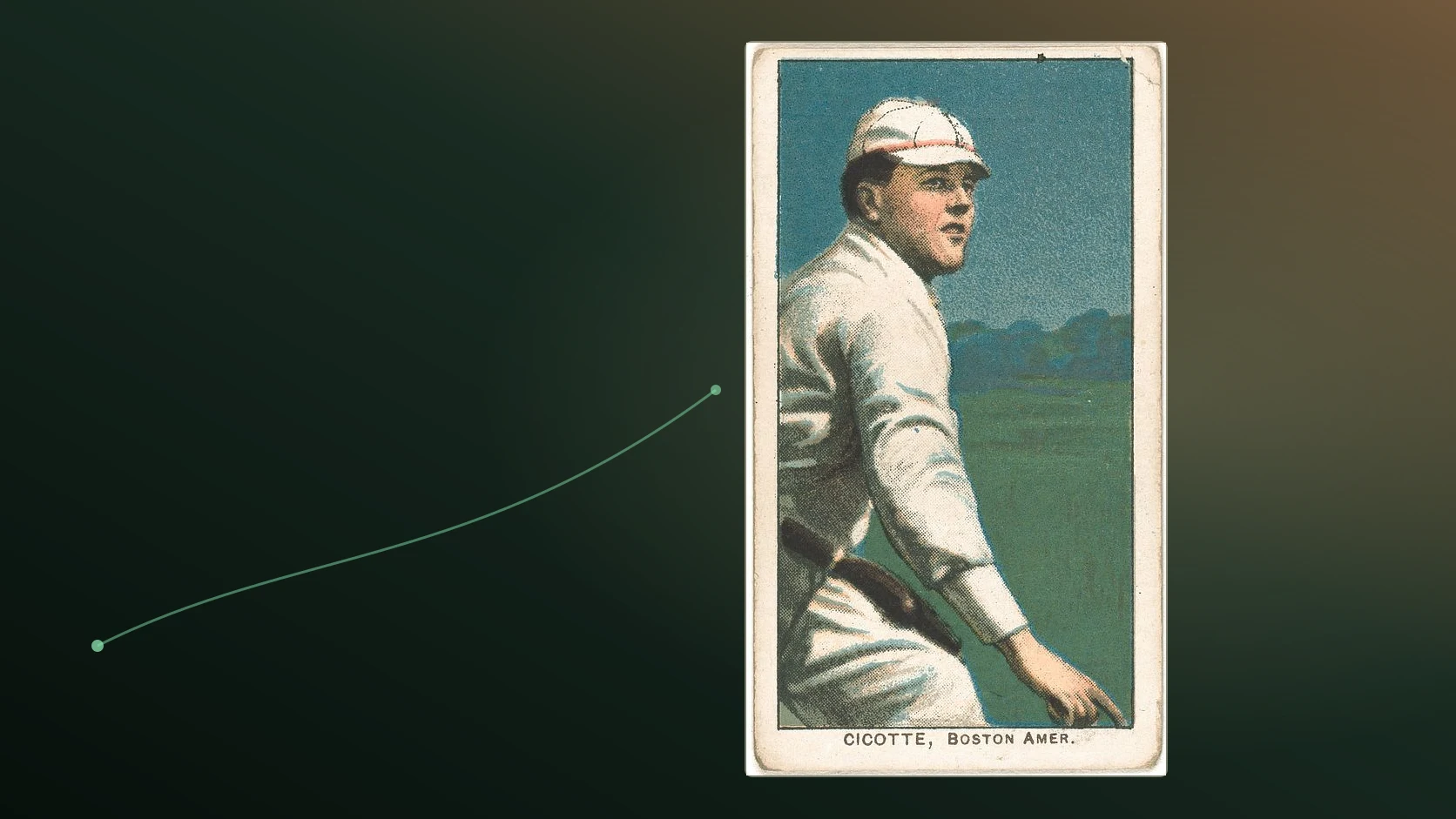
Cicotte's surviving contract contains no 30-win bonus. He was not denied a final opportunity by a calculated benching, and he had already been involved in fix discussions before the alleged refusal could have caused his decision. The 1919 White Sox also had the highest Opening Day payroll in the American League, and their total was more than $11,500 above Cincinnati's.
None of that makes the labour system fair. The reserve clause tied players to clubs and denied them anything resembling modern free agency. Owners retained a large share of revenue and could exercise enormous control over careers. Comiskey could be ungenerous within an already unequal structure. Relative pay and structural power are different questions.
The useful correction is therefore not that the players had nothing to resent. It is that resentment does not prove the specific bonus story, and poor treatment does not turn a deliberate fix into an inevitable act. The men made choices inside an exploitative system. Removing the invented catalyst makes those choices less cinematic and more accountable.
From whispers to a criminal trial
Rumours did not begin when the authorities finally acted. Writers, gamblers and baseball officials questioned the Series while it was still being played. Hugh Fullerton publicly pressed for investigation. Comiskey and American League president Ban Johnson each pursued information, though their rivalry complicated baseball's response.
The scandal remained unresolved through most of the 1920 season. A Chicago grand jury examining an apparently fixed Cubs-Phillies game expanded its attention to the previous World Series. Cicotte, Jackson and Williams gave statements. Eight White Sox players and several gamblers were indicted.
The road from suspected sporting corruption to a criminal conviction was difficult. The prosecution had to prove a conspiracy that fitted the charged fraud offences, connect people operating through several arrangements and rely on witnesses with reasons to protect themselves. Some grand-jury papers disappeared before trial. Statements were challenged. The defendants were acquitted in August 1921.
Acquittal meant that the prosecution had not proved the criminal counts beyond reasonable doubt. It did not mean that no fix existed, no money changed hands or every player told the truth. The Baseball Hall of Fame's archive contains trial documents, exhibits, interviews, investigator reports, correspondence, cancelled cheques and hotel records precisely because the historical case extends beyond the jury's answer to one legal question.
The distinction matters whenever sport disciplines conduct that may also be criminal. A governing body protects competition under contractual and integrity rules. A court tests specified offences under a higher burden of proof and with different consequences. The two processes can reach different results without one automatically cancelling the other.
How one scandal rebuilt baseball's authority
Before the Black Sox case, professional baseball was governed through a three-person National Commission whose authority depended on club owners who also had their own interests. The scandal exposed the weakness of that arrangement. Owners turned to Landis and gave the new commissioner wide power to act in what he considered the best interests of baseball.
The punishment demonstrated what that phrase could mean. Landis maintained the bans despite the acquittals and later acted against other players, coaches and an owner over gambling-related conduct. His office was not simply an administrative replacement. It was a response to the belief that a sport could not sell uncertainty on the field while tolerating hidden certainty off it.
That principle is still relevant, although the betting environment is different. Modern regulated markets create audit trails, operator monitoring and formal integrity relationships that did not exist in 1919. They also create more markets, faster information and more points at which private knowledge may become valuable. The lesson is not that every unusual price move proves corruption. It is that unexplained market behaviour can be a signal that deserves independent investigation rather than a story for insiders to contain.
Readers can learn how ordinary prices express probability in BetOwl's odds guide, but no price can certify the integrity of the event beneath it. That depends on rules, reporting, monitoring and people prepared to act when they know something is wrong.
The scandal also explains why betting history should not be romanticised. The gamblers did not create a clever system or a repeatable route to profit. They exploited privileged information in a dishonest contest, while several groups attempted to cheat one another. For present-day betting, limits and affordability matter alongside integrity. BetOwl's responsible gambling guidance is the practical starting point, not a century-old tale of insiders beating a market.
The long route back to eligibility
For decades, the word "permanent" appeared to end every official Black Sox argument. Jackson and Weaver attracted repeated campaigns, but neither returned to baseball. In 1991, the Hall of Fame formalised a rule preventing anyone on Major League Baseball's permanently ineligible list from being elected.
Then MLB changed the policy in May 2025. Commissioner Rob Manfred concluded that permanent ineligibility should end with death because the practical purpose of the sanction is to exclude a person from active participation. Seventeen deceased individuals were removed from the list, including all eight Black Sox players and Pete Rose.
The Hall immediately clarified the consequence. Removal makes a person eligible for consideration; it does not guarantee a ballot place or election. The Historical Overview Committee will assemble an eight-name ballot for the Classic Baseball Era Committee, which is due to vote next in December 2027. A candidate would need at least 12 of 16 votes for induction in 2028.
That process is not an appeal against the 1921 trial or a historical pardon. Hall voters may consider playing greatness, character, integrity and the evidence surrounding the scandal. Jackson's statistics can finally be placed before an eligible committee, but so can his $5,000, his grand-jury testimony and the contradictions that followed.
The other seven are eligible too. That point has been lost in coverage that treats the policy change mainly as a Jackson and Rose story. Weaver's case, in particular, now moves from a campaign for reinstatement to a possible argument about whether knowledge and silence should outweigh an otherwise strong career. Eligibility creates the forum. It does not predetermine the answer.
A timeline of what changed
| Date | Event | Why it matters |
|---|---|---|
| September 1919 | White Sox players and more than one gambler group discuss fixing the World Series | The conspiracy was fragmented from the beginning, not controlled through one simple agreement |
| 1-9 October 1919 | Cincinnati beat Chicago five games to three | Suspect play occurred inside a Series that also contained genuine competition and strong Reds performances |
| September 1920 | A Chicago grand jury investigation expands to the 1919 Series | Player testimony and public indictments turn long-standing rumours into a legal case |
| July-August 1921 | The criminal trial ends with acquittals | The state fails to prove the charged conspiracy beyond reasonable doubt |
| 3 August 1921 | Landis permanently bans the eight players | Baseball applies its own integrity standard, including failure to report a fix discussion |
| 1991 | The Hall of Fame bars people on MLB's ineligible list | Sporting exclusion formally blocks election to Cooperstown |
| 13 May 2025 | MLB ends permanent ineligibility at death | The deceased Black Sox players become eligible for Hall consideration without being exonerated |
| December 2027 | The Classic Baseball Era Committee is next due to vote | The earliest current route to a 2028 induction, subject first to ballot selection |
What the Black Sox story can honestly say
The strongest modern Black Sox research has not made the scandal less serious. It has made certainty more disciplined.
We can say that members of the White Sox agreed with gamblers to corrupt the 1919 World Series. We can say that money reached players, that several participants admitted involvement and that the criminal acquittals did not erase those facts. We can say the famous Cicotte bonus story is unsupported, the underpayment explanation is too simple and the plot contained more than one betting group.
We should be more careful when judging every player, every game and every disputed action. Weaver's silence is not the same conduct as organising payments. Jackson's .375 average is not an innocence certificate. Williams losing three starts does not prove every poor pitch was intentional. The Reds won a championship that history too often describes only as something Chicago lost.
That combination of fact and uncertainty is more useful than another retelling of the film. It shows how corruption thrives when private information, divided authority and personal grievance meet, then how institutions can overcorrect by making one punishment carry every shade of guilt.
US baseball has produced happier buried histories, including the British team that beat America in 1938, and its present keeps moving through achievements such as Ronald Acuña Jr's 200-200 record. The Black Sox remain different. They are not preserved because the result was extraordinary. They are preserved because the meaning has never stopped changing.
The 2025 ruling has not settled the scandal. It has simply replaced a locked door with a future vote. When that vote comes, the committee will not be deciding whether the public should remember Shoeless Joe Jackson. The public never forgot him.
It will be deciding what, after all this time, remembrance is for.