
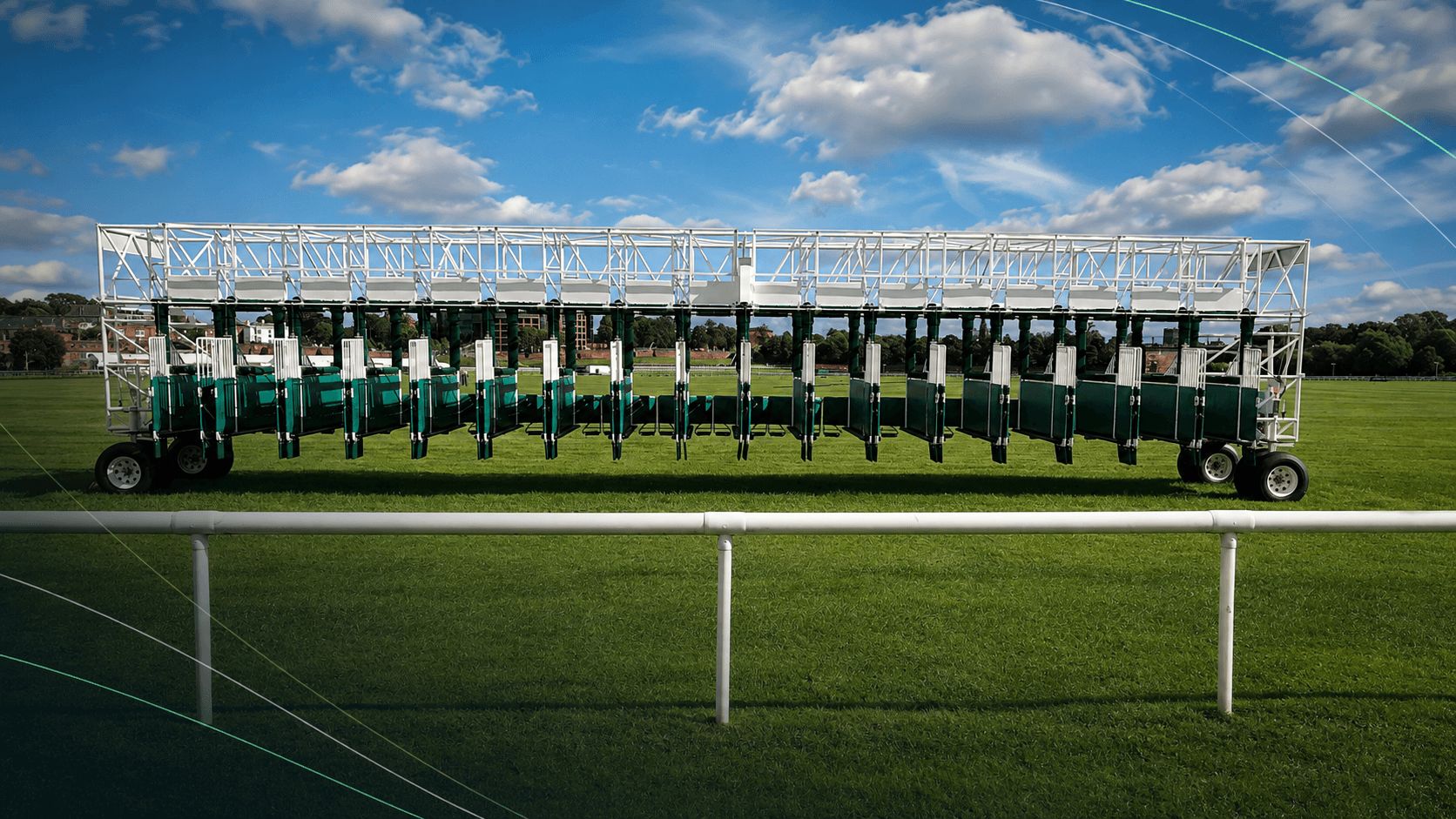
Chester at a glance
- Address
- The Racecourse, Chester, CH1 2LY
- Official Sat Nav advice
- Use CH1 4LD on racedays
- Shape
- Sharp, left-handed circuit
- Approximate circuit
- About one mile
- Home straight
- Short, with position at a premium
- Evidence reviewed
- 7 September 2026
Course description checked against Timeform and At The Races. Visitor address and Sat Nav advice checked against Chester Racecourse.
The short answer
In eight-plus-runner handicaps from 2009 to 2019, Chester's inside stalls were a major advantage at five and six furlongs. Low remained useful at seven furlongs, especially on easier ground. The signal weakened around a mile and a quarter, and no dependable draw edge appeared at a mile and a half or a mile and five furlongs.
That conclusion needs a modern warning. A separate 2021 to 2025 five-furlong review found low-drawn front-runners won only three of 27 attempts. Rail movements, pace and a market that understands the old bias may have reduced its practical value. Chester still rewards position, but the historic headline should not become an automatic betting instruction.
Why the five-furlong reputation exists
Across 86 qualifying races at five and roughly five and a half furlongs, stalls 1 to 4 produced 63 winners. The chart shows share of winners, not the chance that any individual horse would win.
| Draw group | Wins | Share of 86 wins | What it means |
|---|---|---|---|
| Stalls 1 to 4 | 63 | 73.3% | Powerful historical concentration |
| All other stalls | 23 | 26.7% | The remaining stalls combined |
Source: Geegeez Chester Draw and Pace, Part 1, 2009 to 2019. The study used adjusted draw thirds after non-runners.
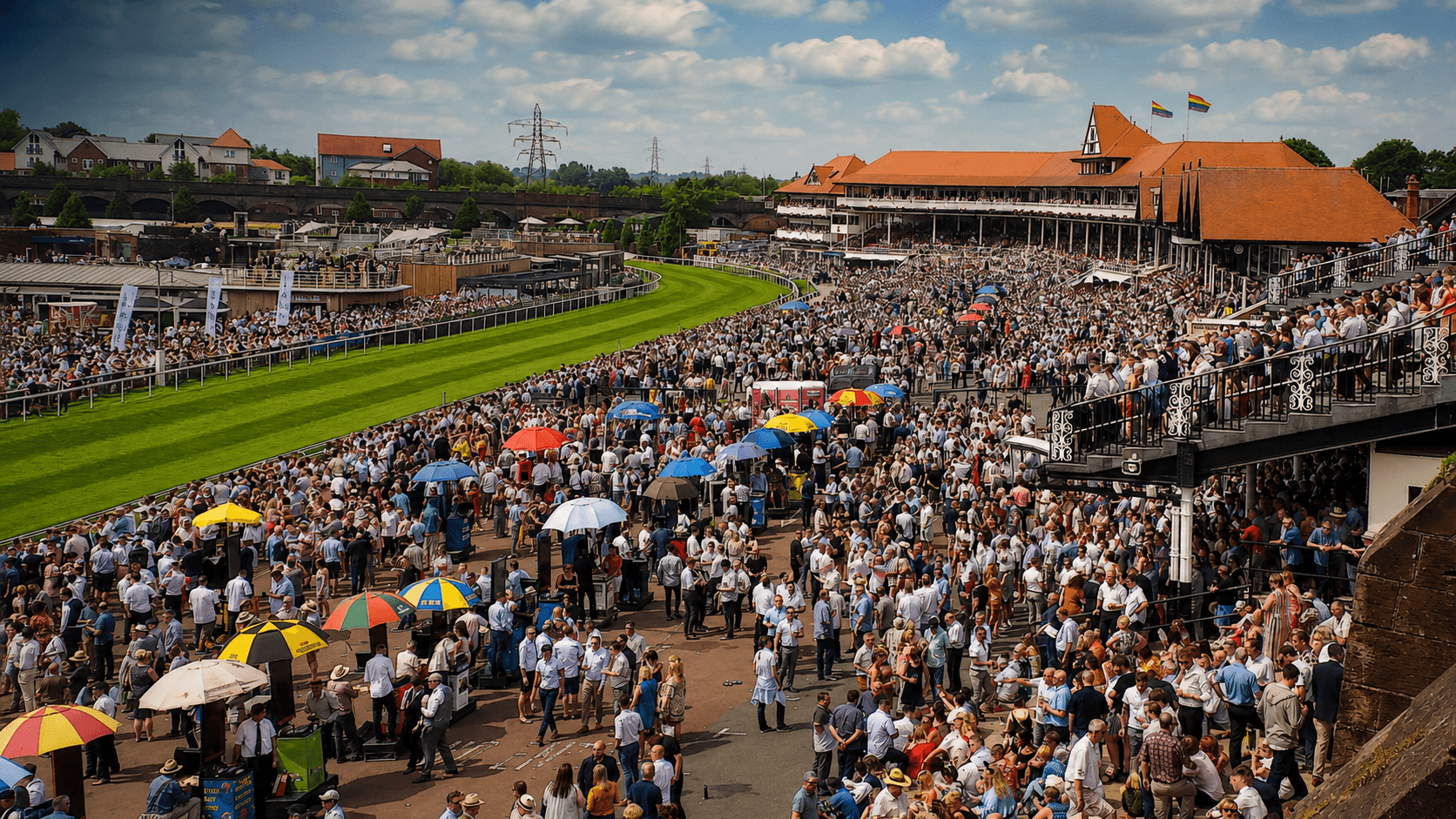
Chester draw bias by distance
| Distance | Historical reading | Key evidence | Practical interpretation |
|---|---|---|---|
| 5f to 5½f | Strong low | Stalls 1 to 4 won 63 of 86 races. | Give inside position serious weight, then test it against pace and current rail placement. |
| 6f | Strong low | Draws 1 and 2 won 25 of 66; double-figure stalls went 1 from 118. | A wide draw plus a hold-up style was especially difficult in the historical sample. |
| 7f | Moderate low | Low won 22 of 37 on good to soft or slower. | The ground-specific result is more useful than a blanket all-going rule. |
| 7½f | Slight low | 115-race study showed a small low edge and a high-stall disadvantage. | Field size and early position decide whether the bias is meaningful. |
| 1m2f | Mixed | Historical low edge weakened in the 2015 to 2019 subset. | Do not force the old low-draw story. Pace was the stronger signal. |
| 1m4f to 1m5f | No clear draw edge | 47 races at 1m4f and 23 at 1m5f. | Trip, pace and position matter more than a simple low-middle-high split. |
Distance evidence: Part 1 and Part 2 of the Geegeez study. Results are historical and are not a prediction of the next race.
Pace can turn a good draw into a bad trip
At six furlongs in fields of 11 or more, leaders and prominent runners won 26 of the 32 races in the historical study. No hold-up horse won. That does not mean every leader is value. It means an inside stall is most useful when the horse can use it, while a slow starter can surrender the rail and become trapped behind rivals.
Before using a Chester draw angle, ask three questions: which horses are likely to lead, can the low-drawn runners hold their position, and will a wide runner have enough early speed to cross without spending too much energy?
Try the evidence explorer
Select the Chester distance, field size and ground. The tool keeps each result attached to its study period and shows when no exact evidence match exists.
Check a course and distance
This first release searches documented public studies. It does not pretend to know today's best stall or use unverified live conditions.
The historical evidence strongly favours the inside stalls, although the more recent study warns that the old edge has weakened.
- Evidence period
- 2009 to 2019, checked against 2021 to 2025 evidence
- Sample
- 86 handicaps in the 2009 to 2019 study. Stalls 1 to 4 supplied 63 winners, or 73.3%.
- Minimum field
- 8+ runners
Read this before using it: Rail movements and the ability to hold an early position can materially change the advantage. Treat the stall as context, not a bet on its own.
Read the underlying study: Chester Draw and Pace, Part 1What this guide cannot tell you
It cannot know how a horse will break, where the field will race or whether today's surface differs from the historical sample. Draw is one piece of race analysis, not a shortcut to certain profit. Betting is for adults aged 18 and over. Only stake what you can afford to lose.